
Grant Report: NordicDendroNet In-Person Network Meeting
Tiny, daily changes in tree stem diameter, often only a few micrometres, measured by automated dendrometers, contain large amounts of information about tree growth dynamics, water status, and responses to environmental stress. Despite the increasing use of automated dendrometers worldwide, Nordic forests remain under-represented in European and global tree growth datasets. Concern over this gap, and a shared recognition of the enormous potential of high-resolution stem growth measurements, motivated the first meeting of the NordicDendroNet- Nordic Dendrometer Network, held on 13-15 October, 2025, in Ås, Norway.
This gathering brought together 46 researchers and innovators working with dendrometers to monitor fine-scale tree growth, including 19 participants based in the Nordic region, with the remaining participants coming from across Europe and the United States. We were really pleased to see strong representation of early-career researchers (ECRs), who made up almost half of all participants.
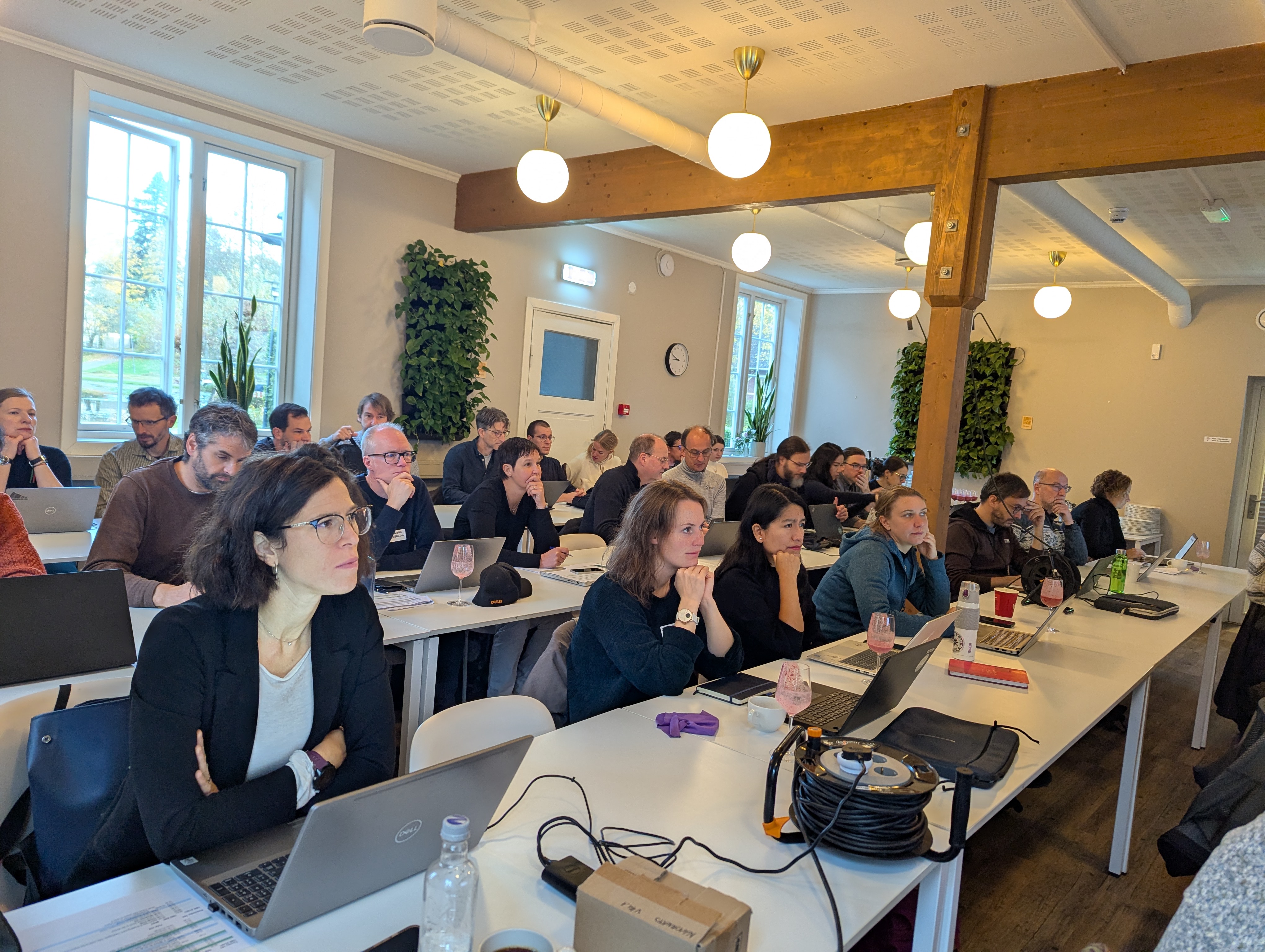
Over three days the programme included keynote lectures, ‘lightning’ style research presentations from all participants, a full day of workshops on dendrometer data processing and collaboration, network-building discussions, and a field trip to the Hurdal ICOS terrestrial ecosystem monitoring facility in Hurdal.
On day one, we heard a wide array of research talks: from large-scale monitoring initiatives, through to detailed studies of root growth throughout the year, citizen science efforts, bark-beetle monitoring, and post-forest-fire recovery. Across all research presentations, the unifying theme was the use of dendrometers to measure tree growth and water-use dynamics at sub-daily, micrometre scales to address both fundamental and applied questions in forest ecology and ecophysiology. An informal “Dendrometer basics” workshop and networking event held over a coffee break provided early-career researchers with practical guidance on sensor installation and best practices as well as the opportunity to ask experts questions.
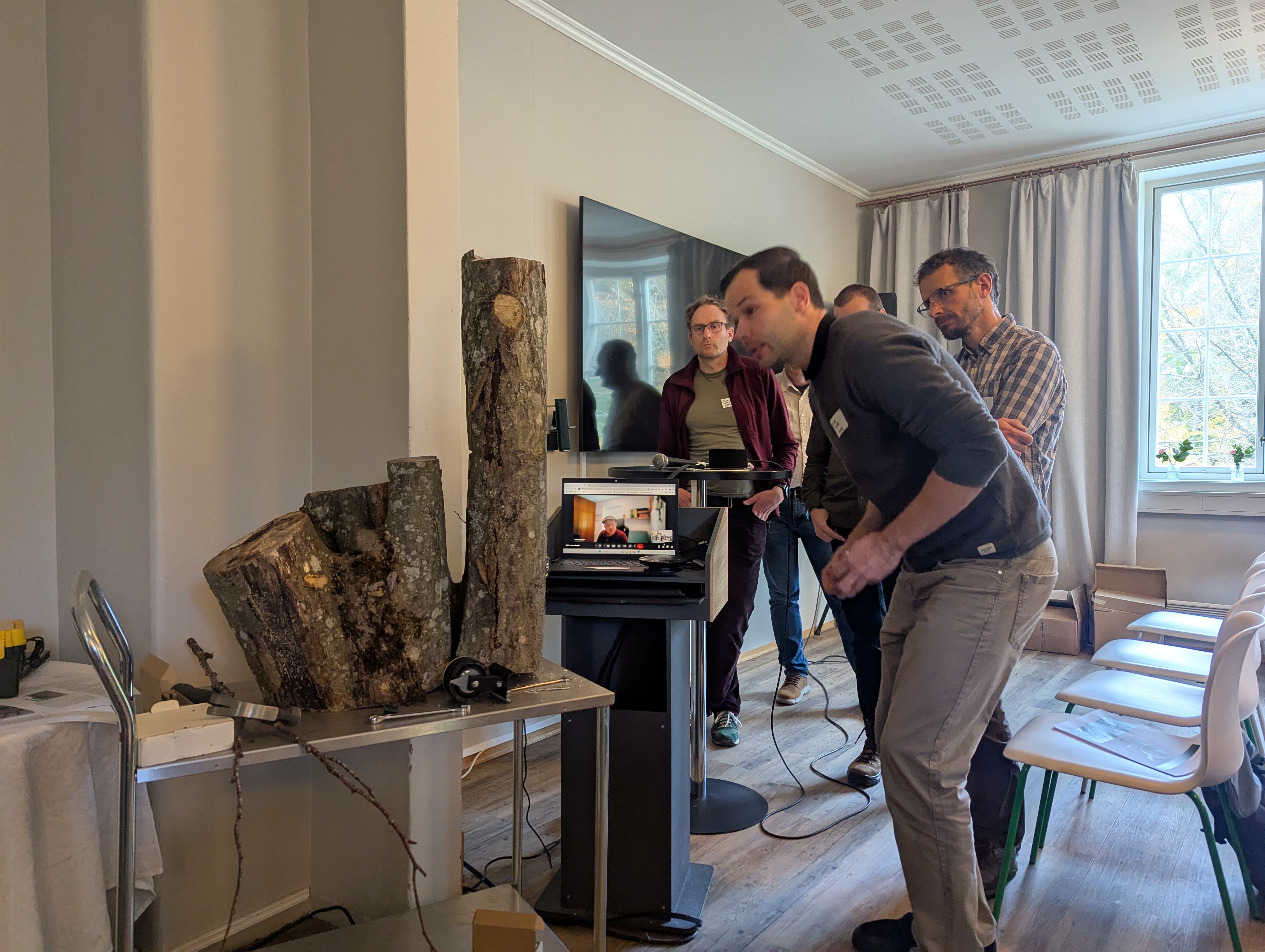
Day two focused on hands-on workshops and discussions centred on dendrometer data processing, interpretation, and emerging research directions, alongside sessions dedicated to strengthening the research network and future coordination.
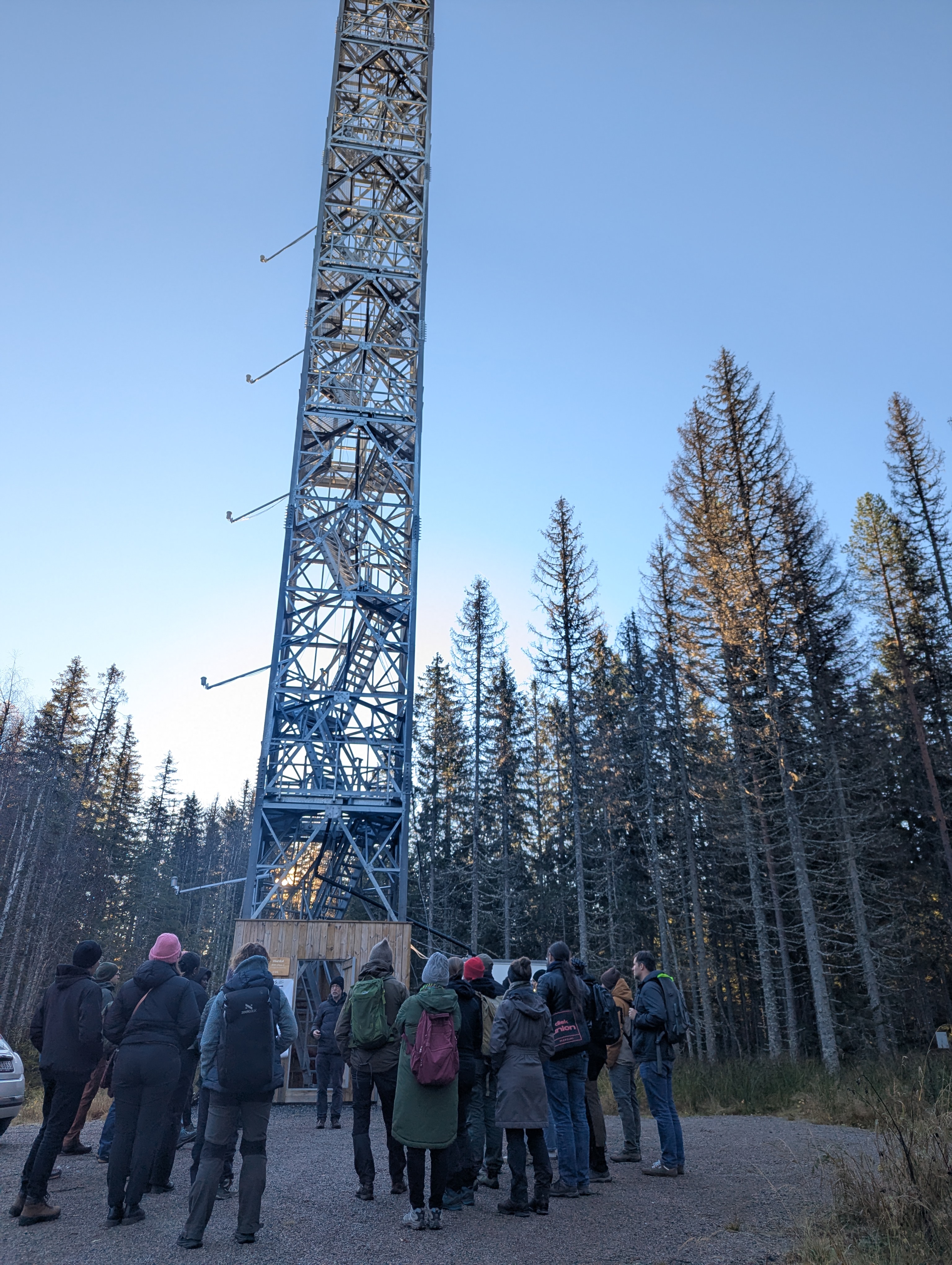
The final day consisted of a field visit to the Hurdal ICOS site, hosted by participant and principal investigator Holger Lange (NIBIO). Participants observed dendrometers installed in a mature spruce forest used to investigate tree productivity and health, and toured additional monitoring infrastructure, and for those brave enough, you could climb the 40 m observation tower!
A key outcome of the meeting was the recognition of the need for a broader Global Dendrometer Network, extending beyond the Nordic region to enhance collaboration and visibility of dendrometer research worldwide. As a result of this meeting, participants have initiated plans for joint research publications, and a forthcoming global metadata call to document who is working with dendrometers and where which will be accessible via dedicated website for the network. Stay tuned! These actions aim to strengthen collaboration, improve coordination, and build on the momentum generated by this first NordicDendroNet meeting.
Organiser
Danielle Creek is a postdoctoral researcher at the Norwegian University of Life Sciences (NMBU), Norway. Her research interests include plant hydraulics, drought stress, and climate impacts on tree growth and forest ecophysiology and of course dendrometers.
This meeting was supported by the Nordic Oikos Early-Career Researcher Grant 2026. The meeting was also funded in part by Nordic Forest Research (SNS) through an annual network grant, and by support from the journal Tree Physiology.